
The Refugee Material Culture Initiative
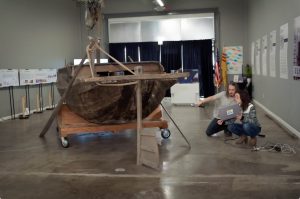
The Refugee Material Culture Initiative (RMCI) is a community-engaged digital humanities project that collaborates with refugee communities to preserve and interpret art and artifacts connected to forced displacement. RMCI digitizes objects, records provenance and community knowledge, curates digital exhibits, and develops educational resources that support refugees in documenting and sharing their histories on their own terms.
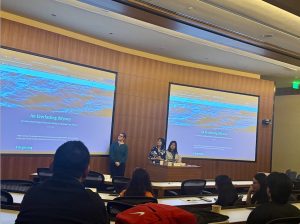
The project grew out of Professor Nguyen’s comparative research on forced displacement in Greco-Roman antiquity and modern Vietnamese history. Rather than treating ancient and modern refugee experiences as equivalent, this approach places them in dialogue to generate new questions about how displacement is represented, categorized, remembered, and materially experienced across different historical contexts. RMCI also puts into practice a form of redistributive classicism: directing the institutional resources, technical infrastructure, funding, and cultural authority available through Classics toward community-led preservation work, rather than using refugee histories primarily to expand or validate the field itself.
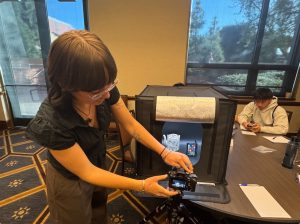
Students can become involved by taking the multi-listed Classics and Digital Humanities course Decolonizing Refugee Data from Rome to Vietnam, where they use comparative analysis and digital methods to study refugee material culture. They can also work with the RMCI Lab, housed in the Cotsen Institute of Archaeology, to photograph and scan artifacts, research and record provenance information, and contribute to digital exhibits and the project’s public database.
You can learn more about RMCI on the project’s website. Be sure to check out the digital exhibits comparing ancient and modern refugeehood, curated by students in Professor Nguyen’s class! You can also read more about the project’s theoretical and methodological framework in Professor Nguyen’s article, “Towards an Archaeology of Refugee Lifeworlds,” which traces RMCI’s origins in collaborative digitization work with the Việt Museum in San Jose, California, follows its expansion through the partnership with the Vietnamese Heritage Museum in Garden Grove, California, and outlines its care-centered approach to preserving material culture through shared authority with refugee communities.